
Eighty-six percent of U.S. civilian leaders say that mission integration is a massive or significant contribution to the success of their organization and mission. Yet only 24% have achieved it. While leaders acknowledge implementation challenges, they know the key capabilities for operationalizing mission integration.
WHAT IS MISSION INTEGRATION?
Mission integration fuses emerging technologies and best-in-class commercial solutions with existing systems to deliver transformative mission outcomes. By leveraging deep mission experience, advanced technology expertise and a collaborative ecosystem of stakeholders, mission integration ensures the security, agility and interoperability of critical capabilities to advance national priorities.
Civilian leaders are under pressure to deliver value, speed and efficiency with government technology Most importantly, they must deliver mission-critical outcomes like increasing productivity and operational capabilities and driving mission value from data. Yet silos slow data-driven decision-making from the enterprise to the edge. And the best commercial innovation is not always designed to meet government demands. Mission integration that brings together commercial, legacy, and emerging technologies is essential to move past these challenges.
Civilian Modernization: A Wide Gap Between Intent and Impact
SAIC surveyed civilian leaders to get their perspectives on mission integration. The consensus is clear, eighty-four percent view it as a massive or significant contribution to their organization and mission. Yet only 24% have achieved it. This is a 62% achievement gap between strategic intent and operational impact (Figure 1).
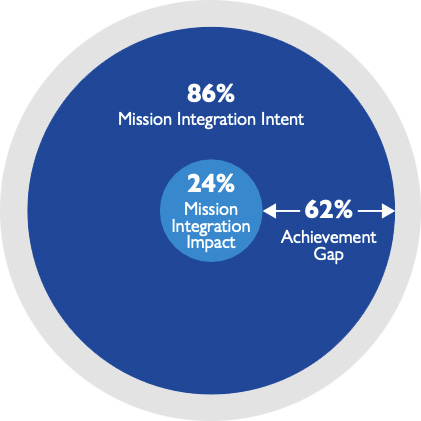
Figure 1: The achievement gap between intent and impact in mission integration
Q: Based on the above definition of Mission Integration, to what extent would effective Mission Integration contribute to the success of your organization and your mission? (Please select one: No contribution, Minimal contribution, Some contribution, Significant contribution, Massive contribution)
Source: SAIC 2025 U.S. Federal Leaders Mission Integration Survey
Implementation is Continuous—and Challenging
There is no end state when it comes to implementing mission integration as a means of modernizing the civilian agencies. With challenges, technologies and capabilities changing constantly, implementation must be continuous. Civilian organizations are at different phases of mission integration maturity (Figure 2). Most (80%) are in the advancing or optimizing phases, with 24% reaching optimization.
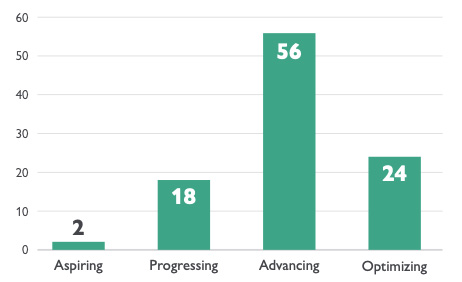
Aspiring: We have a defined plan to achieve mission integration.
Progressing: We have achieved aspects of mission integration.
Advancing: We expect to achieve all aspects of mission integration within the next year.
Optimizing: We have achieved mission integration.
Figure 2: The four phases of mission integration maturity
Q: Based on the above definition of mission integration, how close is your organization to achieving mission integration today? (Please select one: Not at all close, Not close, Somewhat close, Close, Very Close, We have achieved mission integration, Not-Applicable)
Source: SAIC 2025 U.S. Federal Leaders Mission Integration Survey
Despite this progress, 76% of civilian organizations have yet to reach the optimizing phase. This points to significant challenges to operationalizing mission integration (see Table 1), which are being intensified by complexity. For civilian agencies, budgeting and funding, data management and security, and technology integration and modernization are all endlessly complex. There is no room for error when it comes to mission imperatives.
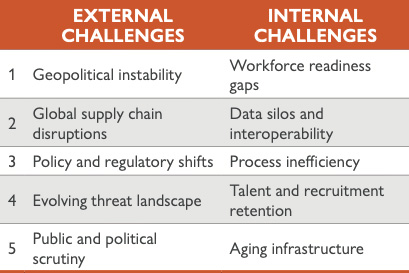
Table 1. Top five challenges to mission success
Q: What are the three most significant external challenges to the success of your mission? (Please rank the top three challenges from 1 to 3, with 1 being the most important)
Source: SAIC 2025 U.S. Federal Leaders Mission Integration Survey
Benefits of Mission System Integration
In this environment, civilian leaders rank enhanced situational awareness and decision making (44%) as the most valuable outcomes of mission integration in driving the success of their organization. Interestingly, the rankings of ten possible outcomes have just a 20% spread. This clustering signals that all of these outcomes are equally valuable to achieve (Figure 3).
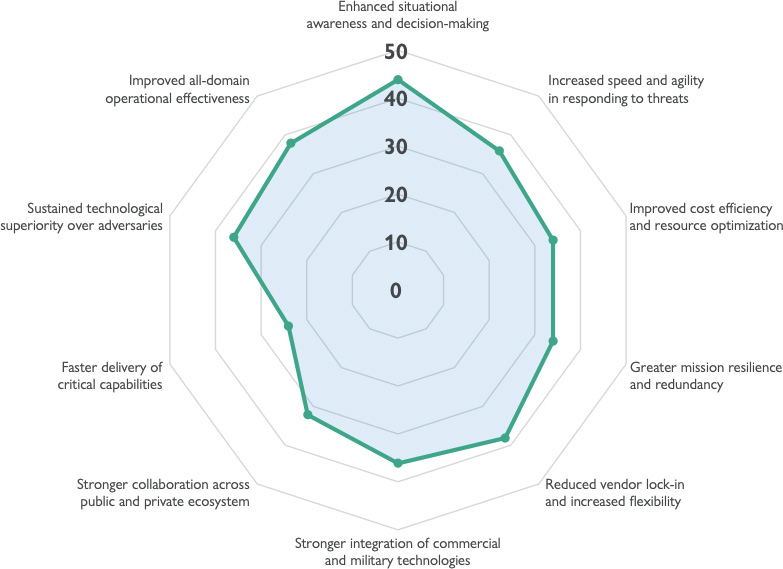
Figure 3: Valuable outcomes from mission integration
Q: How valuable would each of the outcomes of Mission Integration in driving the success of your organization and its mission? (Please rate each of the following outcomes on a scale of 1 to 5, where 1 = Not at all Valuable and 5 = Very Valuable.”)
Source: SAIC 2025 U.S. Federal Leaders Mission Integration Survey
Best Practices for Mission Integration
Achieving outcomes is mission-critical. This is why civilian leaders recognize the imperative of mission integration. Maintaining the efficiency and effectiveness of the federal government can’t happen in isolation. It hinges on connecting the industrial innovation ecosystem in new ways and unlocking data insights through mission integration. This is challenging work. Fortunately, civilian leaders have ideas on the fundamentals for success.
According to these leaders, the four most important elements contributing to their successful deployment of mission integration (in rank order) are:
- Strategic, outside-in perspectives on current and future mission environments. Civilian leaders’ laser focus on the mission and day-to-day operations can sometimes make it hard to benefit from evolving vantage points. Well-informed, outside-in perspectives from vendors with a deep understanding of both the technology ecosystem and business application can elevate speed and quality. Mission integrators can help bridge legacy and emerging technologies and make commercial innovation mission-ready.
- A track record with and commitment to using secure, open-source systems. Custom-coded systems are liabilities to readiness and responsiveness. This is why solutions from technology providers should conform to open architecture standards. With open-source systems, civilian organizations can respond quickly to emerging threats. Open-source systems encourage innovation by facilitating experimentation and rapid iteration. Additionally, they can reduce data interoperability issues and enable seamless, secure data exchange within and across agencies.
- Enhanced agility and adaptability in procurement and contract execution. Civilian organizations need ready access to mission integrators. Only they can quickly, securely and efficiently integrate the best commercial technology with military systems for meaningful results. But these bridge-builders don’t fit traditional contracting norms. Federal acquisition reform that includes mission integration as a defined procurement scope can remove bottlenecks and help government field solutions faster.
- Deep experience with the mission and how it intersects across services and agencies. Civilian leaders have a deep understanding of and connection to their agency’s mission. It is their compass. It goes without saying that deploying mission integration must be done in full alignment with agency- specific mission requirements. While every mission is unique, factoring in how a mission connects to other agencies can enhanced overall service effectiveness by improving practices like data sharing and resource use.
Multiply Civilian Outcomes with Mission Integration
Civilian leaders have developed a mission integration mindset—a nearly universal embrace of mission integration as a driver of success. This understanding is a necessary first step for the federal government to implement mission integration broadly. The more intentional that leaders are about this implementation, the better the outcomes they deliver. When deployed with consistency, mission integration becomes an outcomes multiplier— and one that is required for civilian agencies’ complex mission environments.
Learn how SAIC turns mission integration into mission impact
About the Author

Ravi Raghava is Chief Technology Officer for SAIC’s Civilian Business Group, where he leads technology strategy and drives digital transformation across federal agencies. With more than 27 years in IT leadership, he has guided agencies through modernization to achieve innovation, security and efficiency. Before SAIC, he served as CTO at GDIT’s Cloud Center of Excellence and Vice President at ManTech, leading teams in cloud, DevSecOps, and cybersecurity solutions. Recognized as a transformational leader, Ravi has received the 2025 Fed 100 Award, the 2024 WashingtonExec Pinnacle Award for Cloud Executive of the Year and was named one of WashingtonExec’s Top 20 Cloud Executives to Watch in 2025. ravi.s.raghava@saic.com
About the SAIC 2025 U.S. Federal Leaders Mission Integration Survey
SAIC surveyed 103 respondents from the U.S. Armed Forces and 50 respondents from U.S. federal agencies to understand the perspectives of federal defense, intelligence and civilian leaders on the implementation, challenges and potential of mission integration. Respondents are senior leaders who lead, manage and make decisions regarding people, programs, infrastructure and mission activities, and are responsible for mission outcomes. The online survey was conducted by Market Strategy Group between May 9, 2025 and May 22, 2025. Data referenced in this article includes responses from federal civilian responses only.